El verdadero coraje Sonrie

3 min de lectura
True Courage Smiles
3 min read
Escuchar
El verdadero coraje sonríe. No puede expresarse nunca de otra manera. El coraje es la virtud principalisima, el elemento mas necesario e indispensable para todas las cosas que el hombre realiza en la existencia. Contrario a la cobardia que siempre es oscura y negativa, el coraje es luminoso y positivo y no esta nunca divorciado del amor y la creacion, esos dos factores que forman la unica felicidad en este mundo. Por tanto, el coraje es feliz, y la sonrisa es la sola forma en que se revela en el rostro humano.
La arcaica sonrisa de los antiguos dioses y heroes los identifica como tales. En tiempos menos mitologicos, como los nuestros esa misma sonrisa reaparece en el humilde aspecto y en el semblante de millones de hombres y mujeres desconocidos, cuando ellos encuentran en si mismos la forma mas basica de vivir de acuerdo a su limpia conciencia.
Nosotros hemos conocido muchos grandes heroes, hombres que conscientemente murieron por la Libertad. Pero los que diariamente dedican sus pensamientos a los ideales libertarios, y por ellos sufren toda clase de vejamenes y soportan toda suerte de privaciones, son todavia mas grandes que los que ofrendaron su vida en un momento, bajo una especial circunstancia y en un dia y una hora determinada. Porque siempre es mas util y heroico, vivir para la patria que morir por la patria, en la misma medida que lo es vivir en Dios que morir en Dios…
La libertad politica no es mas que la naturaleza consecuente de la libertad interna, individual, del ciudadano. El hombre que es esclavo de sus ambiciones materiales, y por tanto su voluntad esta mas atenta a sus bajos apetitos que a los deberes que le señala su conciencia, no es un hombre integro, no es un ser libre, es un concupiscente, un corrompido y por ende su caracter no puede ser el de un heroe sino el de un esbirro. Y en un pueblo que tiene en su seno millares de estos hombres arribistas, la tirania y la esclavitud estan latentes - si no manifiestas - como un cancer; y la Libertad no puede estar en su Tabor sino en su Golgota.
Bendigamos, pues, ese silencioso coraje, ese valor casi sonriente de las oscuras masas de hombres que prefieren sufrir pobrezas y provaciones de todo genero, y aun exponerse a varios represalias y salvajes torturas, antes que aceptar el error como una realidad legitima; porque su ejemplo es lo que hace precisamente que la vida sea digna de ser vivida.
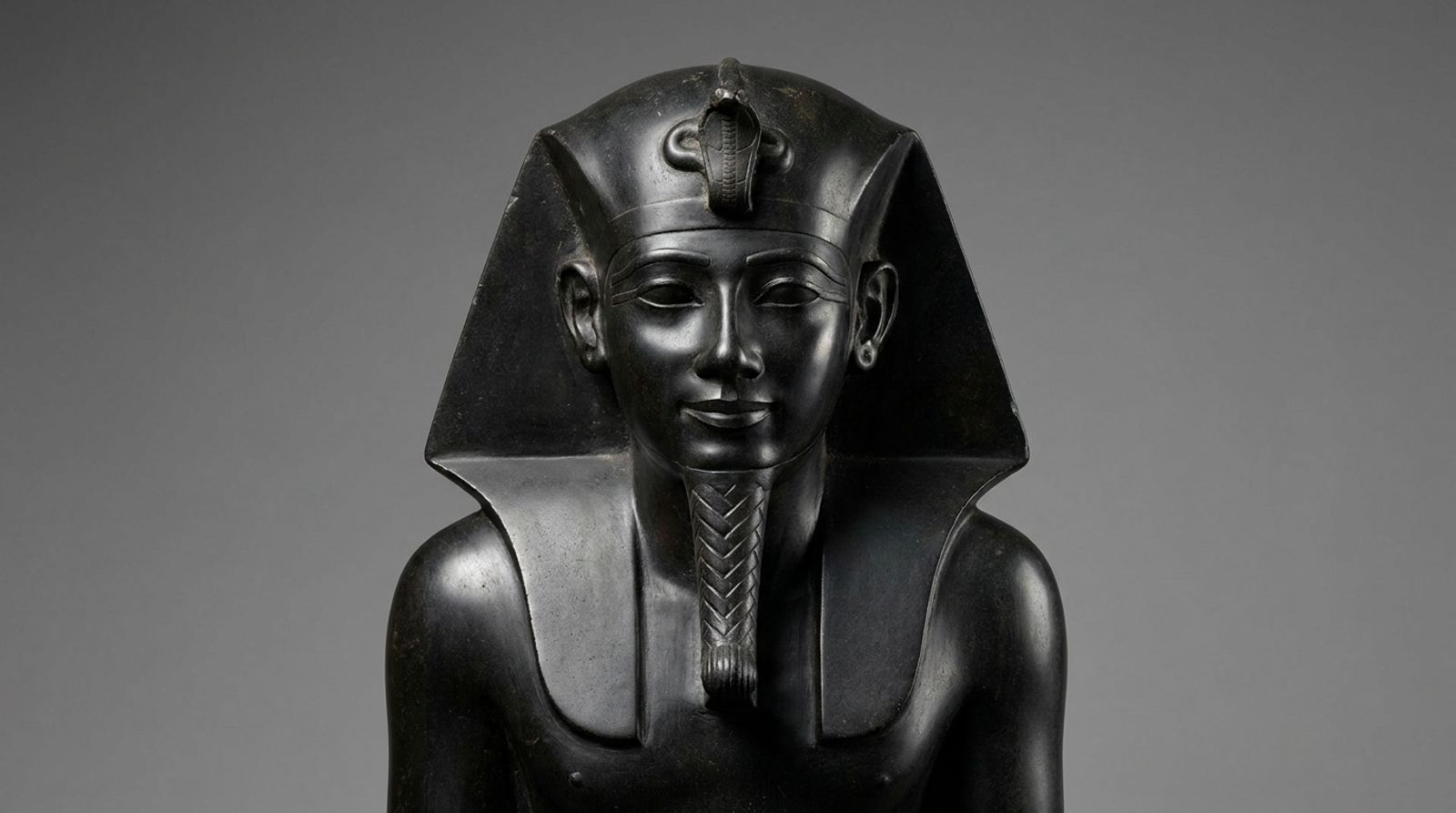
El goce del material arribismo tiene un espasmo efimero. Mas la sonrisa del coraje triunfa siempre a la larga de todas las vicisitudes de la vida. Y como en la estatua encontrada en Egipto, cual foto ilustra estas lineas y que en el museo de Brooklyn exhibe su sonrisa esculpida en negra diorita 365 años antes de Cristo; y como en los labios de Mona Lisa que reflejan mas bien el coraje de Leonardo; y como en la faz de los dioses antguos, la perenne sonrisa del coraje translimita el espacio y el tiempo, para poner, en el alma de las generaciones futuras, su pincelada de verdad, de belleza y de gloria.
Napoleón Tercero Amador
True courage smiles. It can never express itself in any other way. Courage is the foremost virtue, the most necessary and indispensable element for everything man achieves in existence. Contrary to cowardice, which is always dark and negative, courage is luminous and positive, and it is never divorced from love and creation—those two factors that constitute the only happiness in this world. Therefore, courage is happy, and the smile is the only way in which it reveals itself on the human face.
The archaic smile of the ancient gods and heroes identifies them as such. In less mythological times, such as our own, that same smile reappears in the humble appearance and countenance of millions of unknown men and women, when they find within themselves the most basic way of living according to their clean conscience.
We have known many great heroes, men who consciously died for Liberty. But those who daily dedicate their thoughts to libertarian ideals, and for them suffer all kinds of harassment and endure all sorts of privations, are even greater than those who offered their lives in a single moment, under a special circumstance and at a specific day and hour. For it is always more useful and heroic to live for the fatherland than to die for the fatherland, just as it is to live in God rather than to die in God…
Political liberty is nothing more than the consequent nature of the internal, individual liberty of the citizen. The man who is a slave to his material ambitions, and whose will is thus more attentive to his base appetites than to the duties pointed out by his conscience, is not a man of integrity; he is not a free being; he is a concupiscent, a corrupted man, and therefore his character cannot be that of a hero, but that of a henchman. And in a people that has within its bosom thousands of such social climbers, tyranny and slavery are latent—if not manifest—like a cancer; and Liberty cannot be on its Tabor, but only on its Golgotha.
Let us bless, then, that silent courage, that almost smiling valor of the dark masses of men who prefer to suffer poverty and provocations of every kind, and even expose themselves to various reprisals and savage tortures, rather than accept error as a legitimate reality; because their example is precisely what makes life worth living.
The enjoyment of material social-climbing has an ephemeral spasm. But the smile of courage always triumphs in the long run over all the vicissitudes of life. And as in the statue found in Egypt—which illustrates these lines as a photo and which in the Brooklyn Museum exhibits its smile sculpted in black diorite 365 years before Christ; and as on the lips of Mona Lisa, which reflect rather the courage of Leonardo; and as on the face of the ancient gods, the perennial smile of courage transcends space and time, to place, in the soul of future generations, its brushstroke of truth, beauty, and glory.